Kansas City Overdose Deaths Decline as Free Naloxone Access Expands
Provisional data show approximately 80 fewer overdose deaths across the Kansas City metro’s four largest counties. Jackson County is also expanding free, anonymous naloxone access through Bluebox machines.
The Kansas City region is seeing an encouraging decline in overdose deaths while public-health agencies continue expanding access to naloxone and other harm-reduction supplies.
Reporting based on provisional data indicates that approximately 80 fewer people died from overdoses across the metropolitan area’s four largest counties between April 2025 and March 2026 than during the preceding 12 months.
Wyandotte County reportedly recorded fewer than 40 overdose deaths during that period, compared with approximately 65 during the previous year.
The numbers are encouraging, but provisional death data can be revised. It is also not possible to attribute the decline to one intervention. Public-health experts have identified several possible contributors nationally, including wider naloxone distribution, greater awareness, expanded treatment and changes in the illicit-drug supply.
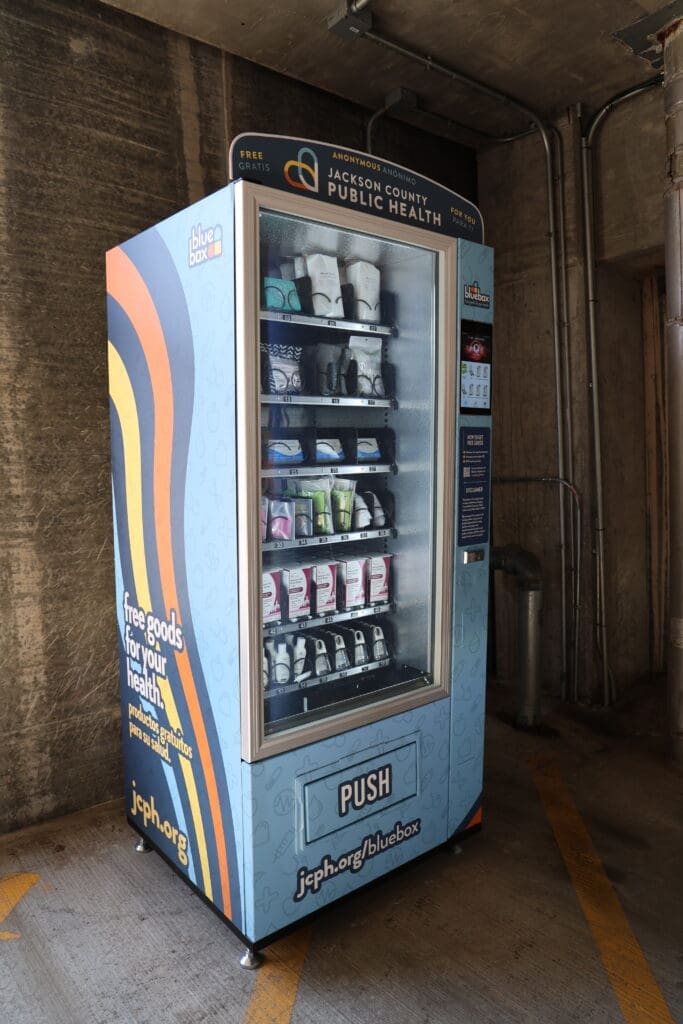
Jackson County Public Health is contributing to the region’s response through Bluebox machines. These self-service units provide free supplies without requiring identification, payment or insurance.
The official Bluebox inventory includes naloxone, fentanyl test strips, medication lock bags, wound-care kits, first-aid products, hygiene supplies and other health resources. Jackson County currently lists five locations in Lee’s Summit, Raytown, Grain Valley and Independence.
A Lee’s Summit Bluebox funded with opioid-settlement money reportedly distributed approximately 800 boxes of naloxone between March and late August. That is a meaningful measure of public access, but it is not the same as documenting 800 overdose reversals.
The county has discussed adding more Bluebox locations. Placement matters: a machine must be accessible at useful hours, located where people can reach it safely and kept consistently stocked.
Naloxone is not addiction treatment, but it can keep someone alive long enough to reach treatment. That distinction is central to understanding harm reduction. Overdose reversal and treatment engagement are complementary parts of a response—not competing strategies.
The region’s declining death count should be welcomed without creating a false impression that the crisis has ended. Every preventable death still represents a family and community loss, and overdose patterns can change rapidly when the drug supply changes.
Why This Matters
The Kansas City experience shows how public-health tools can be moved out of clinics and into ordinary community settings. Anonymous, round-the-clock access may reach people who fear stigma, lack insurance or cannot visit a health department during business hours. The emerging decline provides hope, but careful evaluation is necessary before any one program is credited with causing it.
Addiction Recovery Pro Perspective
Addiction Recovery Pro supports making naloxone easy to obtain while strengthening the path from overdose survival to treatment and recovery. Bluebox machines could become more valuable if communities pair them with simple, private ways to locate treatment, peer support, transportation and follow-up services. ARP also believes settlement-funded programs should report supply costs, restocking frequency, utilization and geographic coverage so residents can judge whether resources are reaching the areas of greatest need.
WHAT THIS MEANS TO THE WORLD OF RECOVERY: Falling overdose deaths demonstrate that progress is possible, but progress should not lead to retreat. Communities should use favorable trends to identify what appears to be working and strengthen it. Treatment access, naloxone, recovery support, prevention and safer prescribing can operate as a coordinated system instead of isolated projects.
Treatment options in this location
Explore addiction treatment options in Kansas City Region, Missouri.
Original sources
Explore Treatment and Recovery Resources
Search licensed treatment facilities and recovery support by state and city.
Explore Treatment and Recovery ResourcesAddiction Recovery Pro provides educational and informational resources. This article is not medical advice, diagnosis, treatment, legal advice or emergency assistance. Information may change after publication. Consult qualified professionals and original sources when making health, legal or treatment decisions.