Palm Beach County Considers $2.75 Million Recovery-Support Proposal
Palm Beach County documents propose $2.75 million for four peer-led Recovery Community Centers, recovery-capital services and recovery-residence support. The items should be treated as proposed until final action is verified.
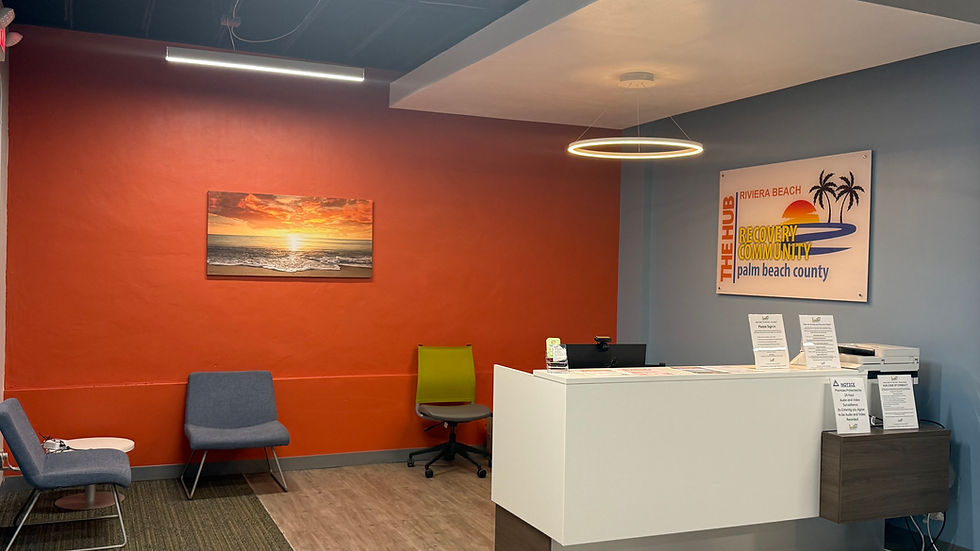
Palm Beach County officials have considered a proposed $2,750,850 investment in peer-led recovery services, Recovery Community Centers and recovery-residence support.
The items appeared on the Palm Beach County Board of County Commissioners’ November 17, 2026 agenda. As of this article’s publication, ARP had not independently verified final board action or executed agreements.
The proposal should therefore not be described as confirmed spending. It represents a significant potential investment and an opportunity for the public to understand what would be funded if the agreements move forward.
Two proposed agreements
The larger proposal would provide $2.6 million to the Palm Beach County Behavioral Health Coalition to support four peer-led Recovery Community Centers.
County documents estimate that the centers would serve approximately 2,220 participants through June 2028.
A separate proposed allocation of $150,850 would support the Florida Association of Recovery Residences. The work described in county documents involves recovery capital, Recovery-Ready Communities and recovery-residence certification.
Together, the two items total $2,750,850.
The proposal combines two related but distinct functions. Recovery Community Centers provide accessible spaces where people can connect with peers and community services. Recovery-residence certification focuses on standards, safety and accountability within housing environments intended to support recovery.
What a Recovery Community Center can provide
A Recovery Community Center is generally a nonclinical community setting organized around peer support and recovery-oriented activities.
Services vary, but a center may offer peer recovery coaching, support groups, resource navigation, employment assistance, family education, community events and connections to treatment or housing.
These centers should not be presented as substitutes for licensed addiction treatment, emergency care or professional mental-health services. Their strength lies in helping people build relationships, practical resources and a sense of belonging before, during and after formal treatment.
A peer-led center may also reach people who are uncomfortable entering a clinical setting. Someone can begin by attending a meeting, speaking with a peer or asking for help navigating resources.
The four-center model could improve geographic access across Palm Beach County if locations, hours and transportation options are planned around the communities most affected.
Serving an estimated 2,220 participants
The proposed agreement identifies an estimated 2,220 participants through June 2028.
That target provides the public with an initial scale, but the number of participants alone will not show whether the investment is successful.
County reporting should distinguish between first-time visitors, repeat participants and people receiving an intensive peer service. It should also explain what happens after someone requests help.
Useful measures could include:
- People connected with treatment
- People receiving peer recovery coaching
- Housing placements and recovery-residence connections
- Employment or education assistance
- Continued engagement after 30, 90 and 180 days
- Family members served
- Geographic areas and populations reached
- Referrals completed rather than merely provided
The centers should also have clear procedures for identifying emergencies and connecting people to licensed clinical or crisis services.
Recovery-residence certification
The proposed $150,850 allocation involving the Florida Association of Recovery Residences addresses another major issue: quality and public trust in recovery housing.
Recovery residences can provide structure and peer accountability after treatment or during community-based recovery. They are not all the same, and certification does not guarantee a particular clinical outcome.
A credible certification system can establish expectations for resident rights, ethical operations, safety, grievance procedures and responsible business practices.
Palm Beach County should clearly communicate what certification means, what it does not mean and how residents or families can report concerns.
Recovery housing has sometimes been associated with deceptive marketing, improper patient brokering or poor living conditions. Strong standards and public information can help distinguish responsible providers from unethical operators.
Recovery capital and Recovery-Ready Communities
Recovery capital includes the resources that help a person maintain recovery: housing, transportation, employment, healthcare, supportive relationships and a safe community.
The Recovery-Ready Communities concept recognizes that recovery outcomes are influenced by more than individual motivation. Local institutions, employers, housing providers and service organizations all affect whether people can rebuild stable lives.
A county investment in recovery capital should produce practical improvements. That might include easier navigation, employer education, stronger housing connections or community policies that reduce unnecessary barriers for people in recovery.
Proposal status matters
Public discussion of settlement funding must separate confirmed spending from recommendations and pending agreements.
Calling a proposal an award before final action can mislead residents and distort settlement-spending totals. It can also create confusion for providers and families who believe a service is already funded or available.
ARP will update this article if final approval, executed agreements or revised amounts are confirmed.
Until then, the $2.75 million should be shown in any settlement tracker as proposed or pending—not as money definitively awarded or spent.
Why This Matters
Palm Beach County’s proposal focuses on the long period of recovery that occurs outside treatment facilities.
Treatment can help stabilize a substance-use disorder, but people still need community, housing, employment, transportation and relationships that support change. Recovery Community Centers can provide a consistent place to build those connections.
The recovery-residence component is also important. Families often struggle to evaluate housing claims, rules, costs and quality. Certification and transparent standards can make the landscape easier to understand, provided enforcement and complaint procedures are meaningful.
Addiction Recovery Pro Perspective
Addiction Recovery Pro views the proposed investment as potentially valuable because it supports recovery infrastructure rather than treating recovery as an event that ends at discharge.
The strongest version of this proposal would combine accessible peer-led centers with clear boundaries, quality standards and direct connections to licensed treatment. Centers should welcome people at different stages while accurately describing what services they can and cannot provide.
ARP also believes the county should publish the final agreements, locations, service schedules, eligibility information and performance reports if the proposal is approved.
Transparency will help the public distinguish a promising plan from measurable implementation.
BROADER RECOVERY IMPACT: If implemented well, Palm Beach County’s four-center model could demonstrate how a large county can create multiple community entry points rather than relying on one centralized location.
The proposal may also advance a more complete understanding of recovery—one that includes social connection, safe housing, employment and community participation.
Other jurisdictions should watch how Palm Beach County defines participation, measures completed referrals and protects residents within recovery housing. Those lessons could be more valuable than the headline dollar amount alone.
Treatment options in this location
Original sources
Explore Treatment and Recovery Resources
Search licensed treatment facilities and recovery support by state and city.
Explore Treatment and Recovery ResourcesAddiction Recovery Pro provides educational and informational resources. This article is not medical advice, diagnosis, treatment, legal advice or emergency assistance. Information may change after publication. Consult qualified professionals and original sources when making health, legal or treatment decisions.