USDA Awards $911,000 to Expand Ten16 Recovery Network in Mid-Michigan
A $911,000 USDA grant will help Ten16 Recovery Network add new gathering, wellness and family-programming space at its Mid-Michigan rehabilitation facility.
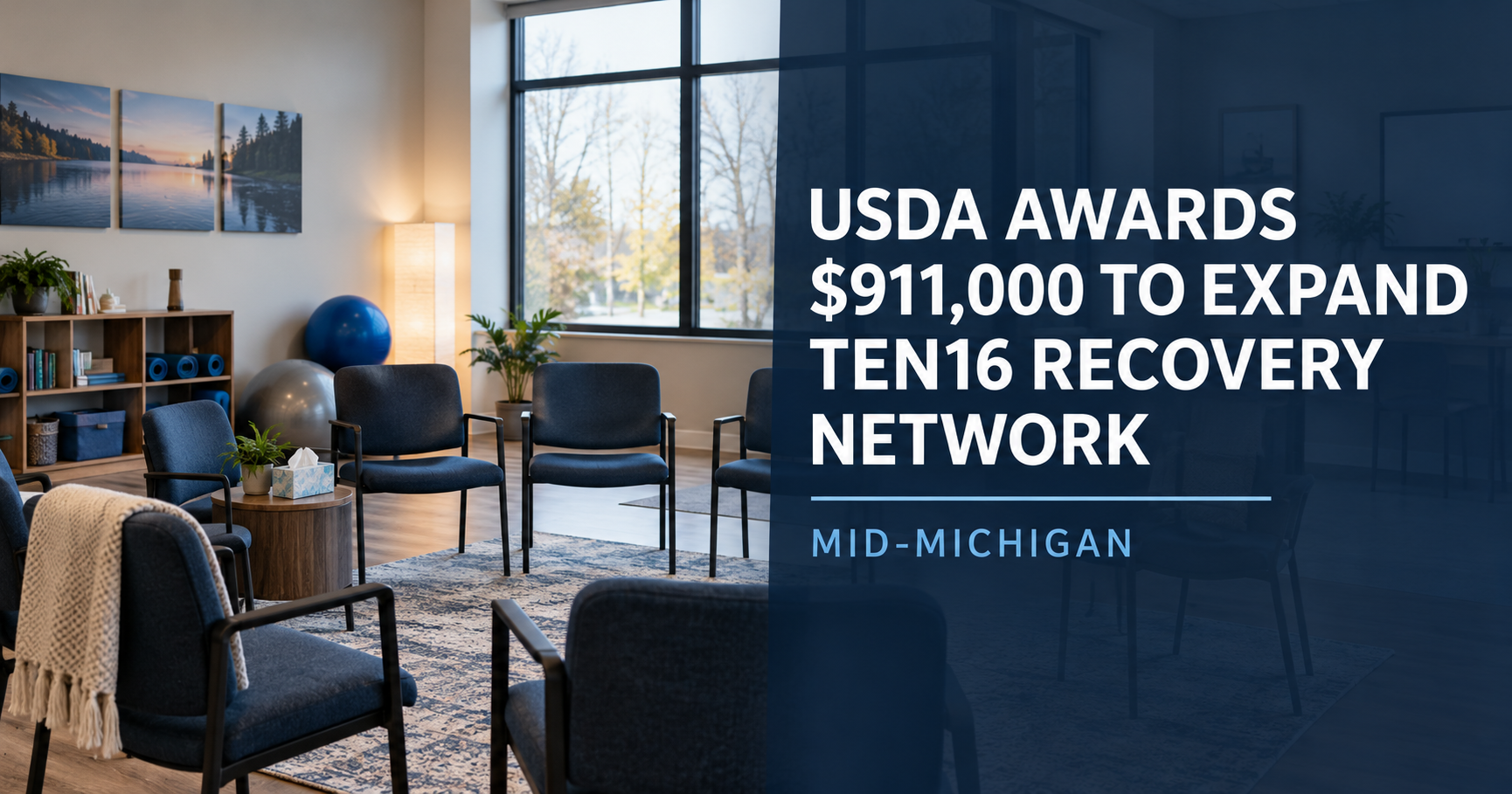
The U.S. Department of Agriculture has awarded Ten16 Recovery Network a $911,000 grant to expand and improve its rehabilitation facility in Mid-Michigan.
USDA Rural Development announced the investment on October 23, 2026. The funding comes through the agency’s Community Facilities Program, which supports essential facilities and public services in rural communities.
Ten16 will contribute an additional $100,000 toward the project, bringing the combined project investment to approximately $1.011 million.
WHAT THE PROJECT WILL ADD
According to USDA, the project includes construction of a new activity and recreation center with larger spaces for recovery-related gatherings.
The planned center is expected to include:
- Exercise and wellness equipment
- Larger areas for group meetings
- Space for family weekends
- Fellowship and community-recovery gathering areas
- Additional room for recovery-related events
The project also includes an expanded parking area and improvements to the facility’s driveway.
Ten16 Residential Program Manager Paul Wolanin said the additional space will support group meetings, family involvement, wellness activities and community events intended to strengthen relationships and support long-term recovery.
WHAT THE ANNOUNCEMENT DOES NOT SAY
The USDA announcement confirms improvements to Ten16’s physical facility, but it does not state that the organization is adding residential beds, increasing its licensed treatment capacity or opening a new clinical program.
The project should therefore be understood as an expansion of the facility’s recovery, family and community-supporting environment rather than a confirmed increase in admissions capacity.
ABOUT TEN16 RECOVERY NETWORK
Ten16 Recovery Network is a nonprofit organization that has served Mid-Michigan since 1979.
According to the organization’s website, its services include residential substance-use treatment, outpatient counseling, recovery housing, hospital and community outreach, prevention programs and recovery-support services.
Ten16 operates programs across Central Michigan, with several of its primary services based in Midland.
The organization describes recovery as a continuing process supported by treatment, personal accountability, healthy relationships and connection to the community.
WHY RECOVERY SPACE MATTERS
Clinical treatment is only one part of the recovery process.
Facilities also need appropriate spaces for peer connection, physical wellness, family participation, group meetings and continued community support. These services can help people develop relationships and routines that continue beyond the initial treatment episode.
This can be especially important in rural and smaller communities, where treatment and recovery resources may be spread across large geographic areas.
WHAT FAMILIES SHOULD KNOW
The grant does not guarantee that a treatment bed or recovery-housing placement is currently available.
Anyone interested in Ten16’s services should contact the organization directly to confirm:
- Which programs are currently accepting clients
- Admission and eligibility requirements
- Insurance and payment options
- Residential and outpatient availability
- Recovery-housing requirements
- Which location provides the appropriate service
Treatment availability, program requirements and payment options can change. Families should verify current information directly with the provider before making travel or admission arrangements.
The USDA investment reflects continuing demand for addiction treatment and long-term recovery support in Mid-Michigan. It also demonstrates how facility improvements can strengthen family participation, peer support and community connection alongside clinical care.
Why This Matters
Rural addiction-treatment organizations often serve people across large geographic areas with fewer nearby options. Investments in meeting, family, wellness and community space can strengthen the recovery environment even when they do not add clinical beds. The project also provides a current example of federal rural-development funding being used to support addiction-recovery infrastructure.
Addiction Recovery Pro Perspective
Addiction Recovery Pro supports investments that make treatment and long-term recovery resources more accessible, welcoming and connected to the community. ARP also believes expansion announcements must be described accurately. This project improves Ten16’s facility and recovery-supporting space, but no increase in licensed beds or admissions capacity has been announced.
Original sources
Explore Treatment and Recovery Resources
Search licensed treatment facilities and recovery support by state and city.
Explore Treatment and Recovery ResourcesAddiction Recovery Pro provides educational and informational resources. This article is not medical advice, diagnosis, treatment, legal advice or emergency assistance. Information may change after publication. Consult qualified professionals and original sources when making health, legal or treatment decisions.